


Countering the loss of biodiversity
Biodiversity Strategy
In recent years, the focus has been on climate change, but now the issue of biodiversity is becoming increasingly important. The loss of biodiversity is accelerating. According to the latest survey by the World Economic Forum, biodiversity loss ranks second among the greatest long-term risks (10-years), directly behind extreme weather events. Biodiversity loss has major implications. About 1/3 of global food products depend on insect pollination – that’s triple-digit billions worth of products annually. This example illustrates our dependence on ecosystem services. Scientists and conservation organizations have long been trying to raise awareness of this issue. Legislators, initiatives, and rating organizations have now taken up the topic and developed methods and reporting standards to help companies address biodiversity, in particular by
- understanding and addressing the links between their business activities and their impact on biodiversity (for different business and supplier locations) and
- managing the risks (and opportunities) of biodiversity loss at an early stage.
- Blogpost: Biodiversity
- Whitepaper: Biodiversity
- ESG-Criteria
- DFGE Webinars
- Biodiversity Webinar Recording
- Biodiversity in the CSRD
- WEC Global Risks Report
An overview of the most important methods and standards for addressing biodiversity:

Science Based Target Network (SBTN)
The Science Based Target Network (SBTN) publishes guidelines for setting targets to minimize the negative impact companies may have on biodiversity. These are in line with scientific recommendations. Official target setting and validation of targets creates a basis for effectiveness and comparability.
Taskforce on Nature-related Financial Disclosures (TNFD)
The Taskforce on Nature-related Financial Disclosures (TNFD) was founded in 2021 by, among others, the G20 group of countries from Europe and Africa. It has published frameworks for identifying nature-related impacts, dependencies, risks, and opportunities for companies. The guidelines also include the prominent LEAP (locate-evaluate-assess-prepare) approach to assessing nature-related issues by locating the relevant interfaces with nature, evaluating dependencies and impacts, assessing nature-related risks and opportunities, and preparing for the impacts.
ISO 14001 & ISO 17298
ISO 14001 is a long-established standard for environmental management systems that could be linked to certification. At its core, the standard deals with planning and setting goals, implementation and execution of measures, monitoring of these measures, and continuous improvement of the process. A new update to the standard is planned for April 2026 (ISO 14001:2026). This will make the consideration of biodiversity loss and the impact of business activities on biodiversity an integral part of environmental management. In addition, ISO 17298 provides international guidance on integrating biodiversity aspects into corporate strategy.
ESRS E4 – Biodiversity and Ecosystems
In November 2025, a new draft of the European Sustainability Reporting Standard (ESRS) E4 – Biodiversity and Ecosystems of the Corporate Sustainability Reporting Directive (CSRD) was presented. The reporting requirements include a biodiversity and ecosystem transition plan, biodiversity and ecosystem policies, and targets and indicators to monitor and control biodiversity development.
How can DFGE help?
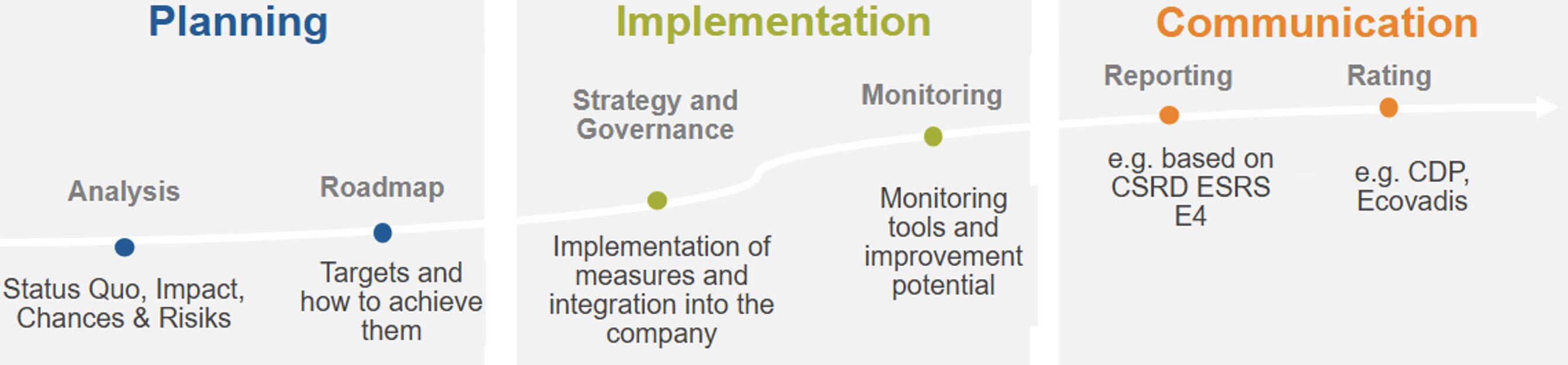
Together with our customer, we take one step at a time:

Your Advantages
Why DFGE on the biodiversity strategy issue?
- LCA and carbon footprint expertise for biodiversity impact evaluation
- Detailed knowledge of supply chains involving agricultural raw materials, including experience in calculating FLAG (Forest, Land, and Agriculture) emissions
- Preferred Partner status with rating organizations such as CDP and EcoVadis – we show you the data gaps